

Overview
In the world of construction and structural integrity, the focus is often on the “hold”. Pull-testers usually test anchors to ensure the base material won’t crack and the epoxy won’t slip. But there is a second, equally critical side to the safety coin that often gets overlooked: the input force.
You know your anchor can hold 20,000 lbs., but do you know if your impact wrench is actually delivering the tension required to engage it?
Enter the Skidmore-Wilhelm Test—the industry’s “truth serum” for bolting tools.
The Missing Link: Verifying the Tool, Not Just the Anchor
Many people confuse standard Anchor Pull Testing with Skidmore Testing. While both are vital, they measure completely different things.
- Anchor Testing verifies the substrate (the concrete, masonry, or rock) and the bond. It answers questions such as, “If I pull on this bolt, will the wall fail?”
- Skidmore Testing (or Pre-Installation Verification) verifies the installation method and the tool. It answers the question: “Is my impact wrench actually tightening this bolt enough to create the required clamping force?”
Think of it like a car. Anchor testing checks if the brakes work. Skidmore testing checks if the driver is actually pressing the pedal hard enough. If your tools aren’t calibrated, even the strongest anchor in the world can fail because it was never properly engaged.
The Physics of Safety: Torque vs. Tension
The biggest misconception in bolting is that Torque equals Tension. It doesn’t.
- Torque is the turning effort you apply (foot-pounds).
- Tension is the actual clamping force created as the bolt stretches (kips or pounds).
This relationship is messy. Rust, dust, lubrication, and washer placement can drastically change how much torque is needed to achieve the correct tension. This is known as the K-Factor (nut factor).
A rusty bolt might require 500 ft-lbs of torque to reach 30,000 lbs of tension. A well-lubricated bolt might hit that same tension with only 300 ft-lbs. If you simply set your wrench to a “book value” without testing, you are guessing.
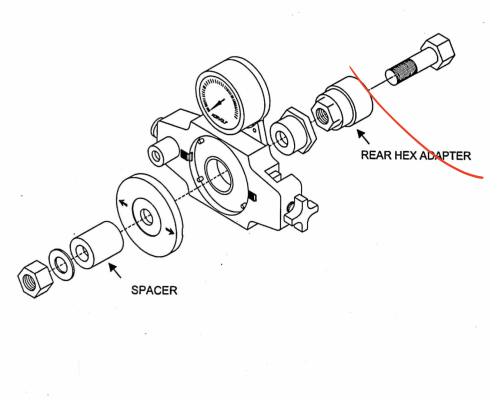
The Skidmore Test eliminates the guess. It is a hydraulic load cell that measures the actual tension achieved in a fastener. By installing a sample bolt into the Skidmore unit and tightening it with your crew’s actual impact wrench, we can see exactly how much clamping force that tool is delivering.
Why Accurate Inputs Matter
If you don’t calibrate your installation tools using a Skidmore test, you risk two catastrophic failures:
- Under-Tensioning (Loose Bolts): If the tool clicks off too early, the bolt doesn’t stretch enough. The joint remains loose, leading to vibration loosening, fatigue, and eventually, the bolt shearing off under dynamic loads.
- Over-Tensioning (Yielding): If the tool is too powerful, you can stretch the bolt past its “yield point.” The bolt essentially turns into taffy—it becomes permanently deformed and weak, ready to snap unexpectedly.
For slip-critical joints in steel structures or heavy-duty concrete anchoring, “tight enough” isn’t a measurement. You need calibrated precision.
Skidmore Verification Example
How Atlas Anchor Testing Can Help
At Atlas Anchor Testing, we don’t just verify that your anchors hold; we verify that your team is installing them correctly.
We bring the lab to the job site. Our mobile verification services allow us to:
- Calibrate Impact Wrenches: Ensure your guns are hitting the target tension for the specific bolts you are using that day.
- Verify “Turn-of-Nut” Methods: Confirm that your crew’s rotation methods are achieving the required pre-load.
- Pre-Installation Verification (PIV): As required by R.C.S.C. and A.I.S.C. standards, we test the fastener assembly before it ever goes into the structure.
Don’t leave your structural safety to chance or uncalibrated tools. Verify the hold and the hand that tightens it.
Ready to calibrate for Safety?
Visit AtlasAnchorTesting.com to schedule your site visit.